
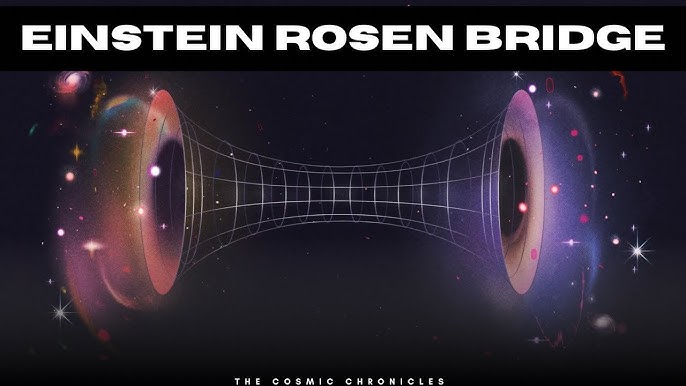
In 1935, Albert Einstein and Nathan Rosen published a groundbreaking theoretical paper demonstrating that general relativity allows for geometrical shortcuts connecting distant points in spacetime: the Einstein–Rosen bridge, colloquially known as a wormhole.
By connecting two distinct Schwarzschild black hole horizons, such theoretical conduits offer intriguing mathematical bridges across cosmic distances. While traversable wormholes would theoretically require exotic matter with negative energy density to remain stable and open, modern quantum gravity and holographic ER=EPR conjectures continue to reveal profound links between spacetime topology and quantum entanglement.